





The Best Australian Work Dresses That Are Flattering
Most women have been here. The dress that looked great online arrived and sat strangely through the waist. The one that seemed promising in the change room started showing its flaws when you try it on the actual day. So you circle back to the same reliable piece you've already worn twice this week because at least you know it works.
It's not a personal style problem. There are plenty of Australian work dresses on the market, but a surprising number of them are designed to look good on a rack rather than perform on a real body. The fit gets vague. The hem is a guess. The waist does something on the model that translates to nothing once you've actually worn it through a long office day.
Knowing what to look for makes the whole process far less frustrating. In this blog, we’ll break down what actually matters when choosing a work dress.
What Makes a Work Dress Actually Flattering
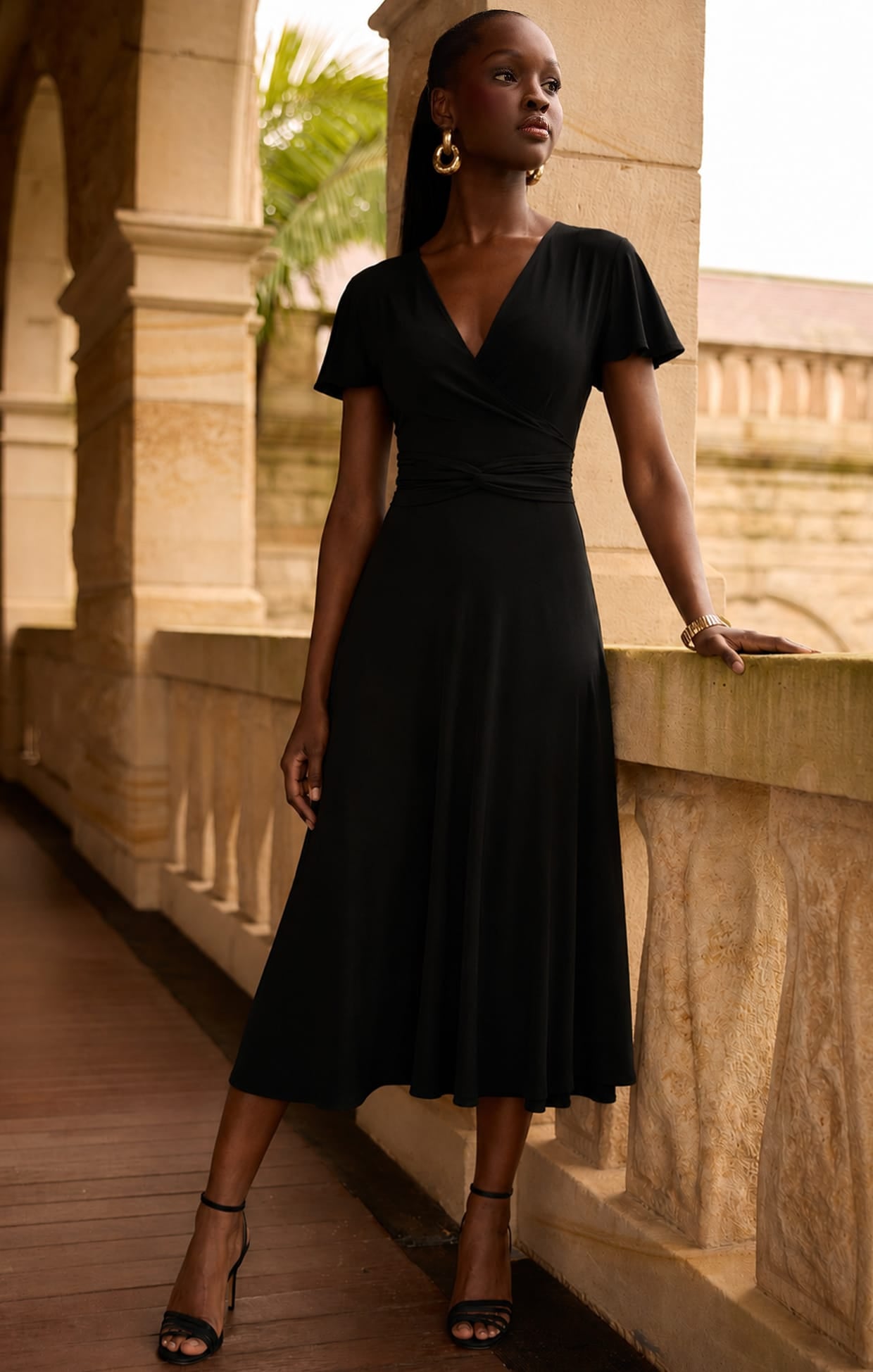
Waist Definition
A seam or tie sitting slightly above the natural waist gives the whole dress the proportion it wouldn't otherwise have. Plenty of corporate styles do skip it on purpose, aiming for something minimal and clean. The result tends to look more like medical scrubs than anything you'd choose to wear to a board meeting.
What Makes a Work Dress Actually Flattering
Fabric
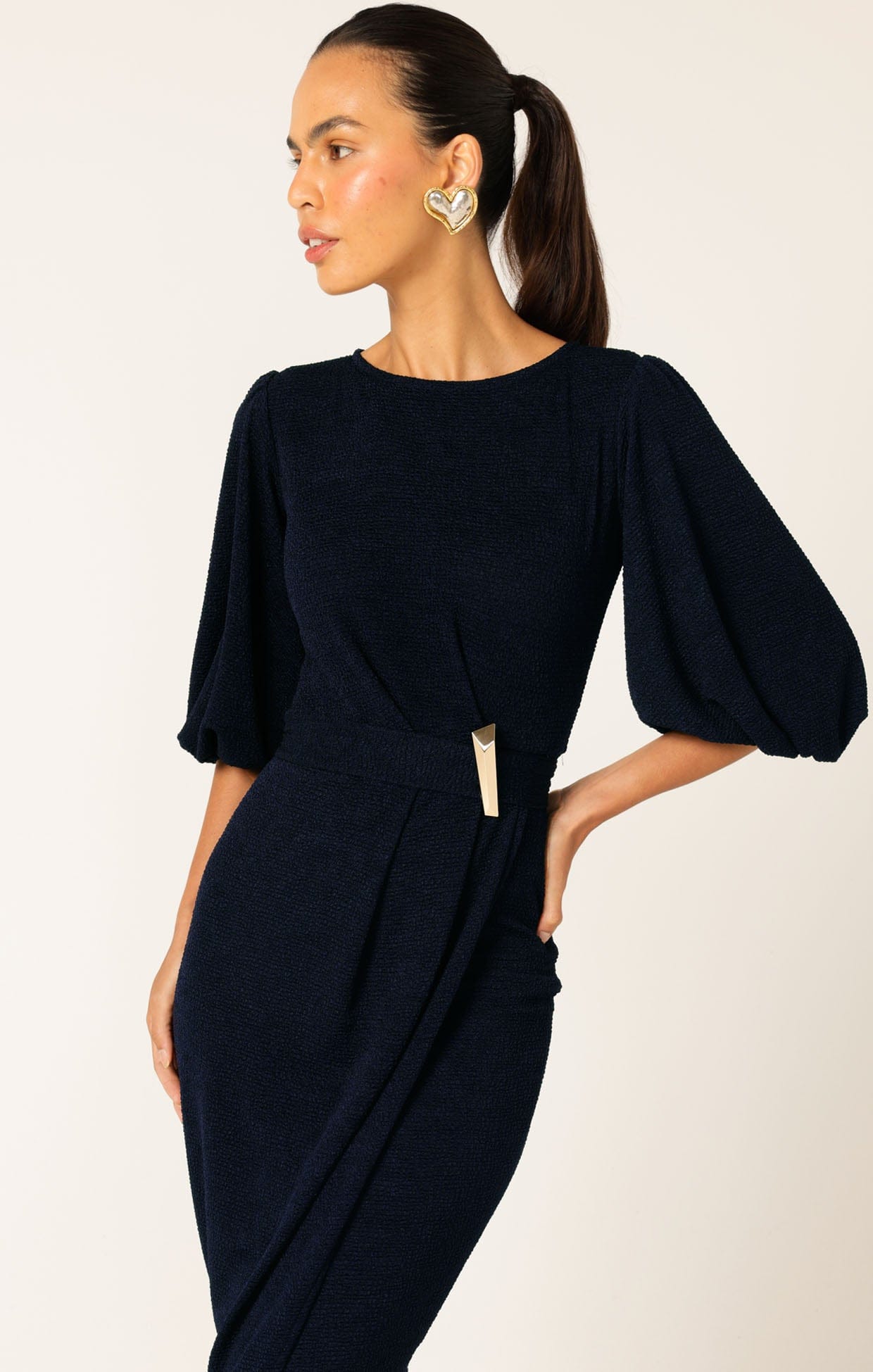
The way a fabric behaves after 5 hours of wear tells you everything its appearance on the hanger cannot. Good ponte, bonded stretch, structured crepe, these hold their line through a full day. Budget jersey loosens across the seat by mid-morning and stays that way. Thin crepe wrinkles the moment you sit down for any stretch of time. For a dress that has to carry you from morning through to an evening commitment, fabric isn't a secondary decision. It is the decision.
What Makes a Work Dress Actually Flattering
Hem Length
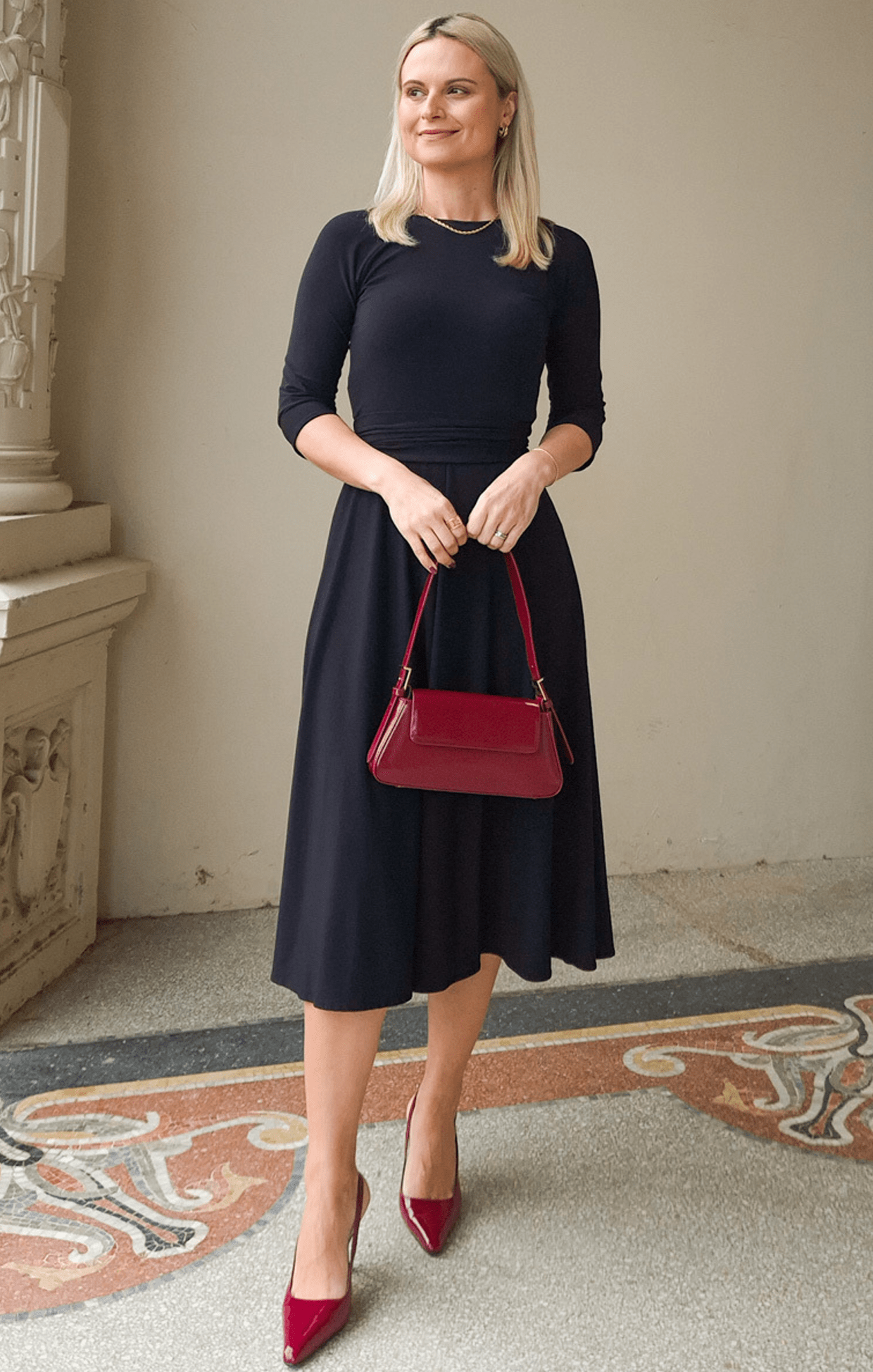
This one causes more wardrobe regret than almost anything else, and it gets the least thought before buying. A hem that hits at the widest point of the calf makes the leg look shorter and heavier. A proper midi, falling between the knee and mid-calf, does the opposite. The difference might only be a few centimetres. The visual effect is not small.
What Makes a Work Dress Actually Flattering
Line Direction
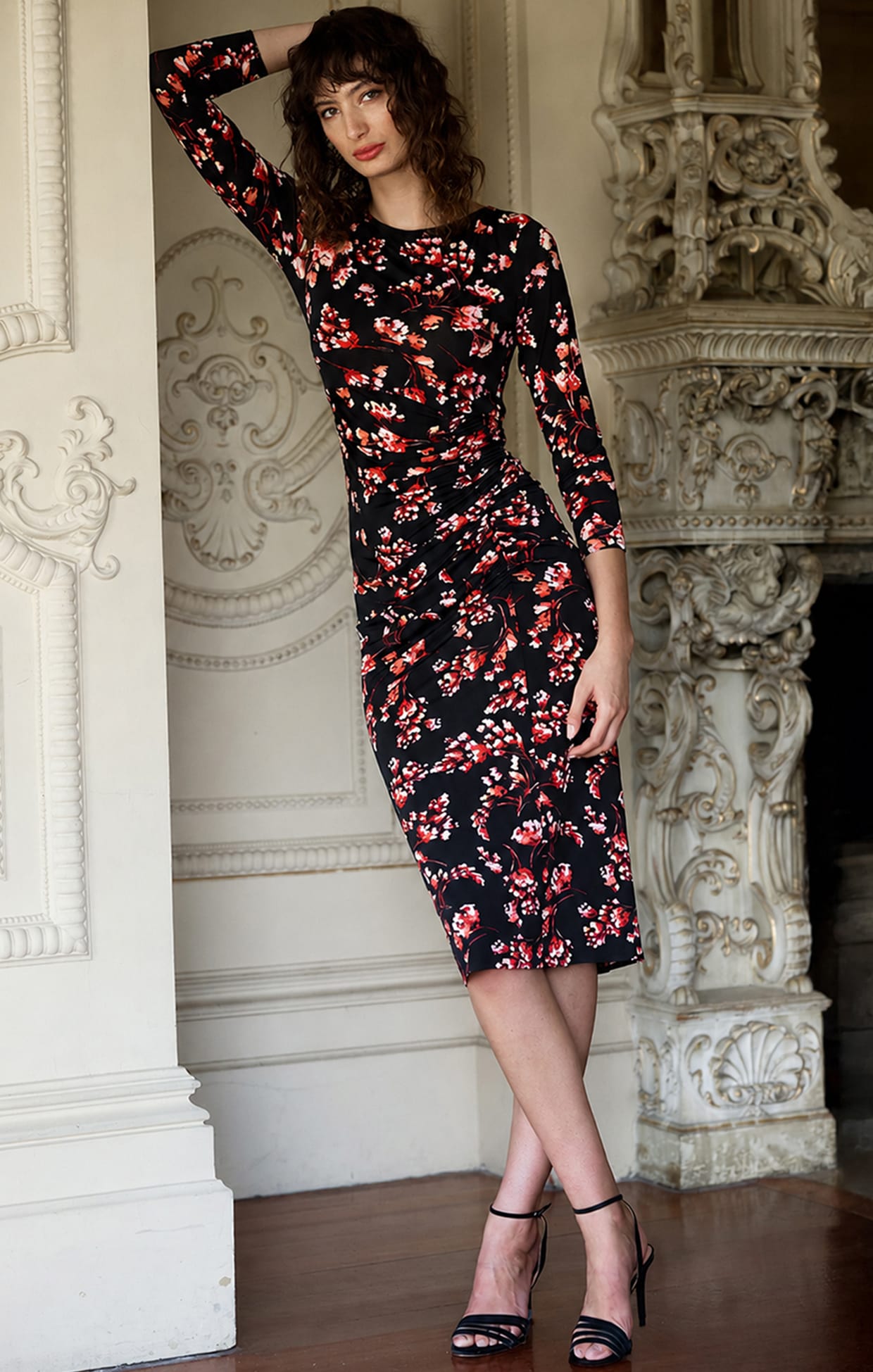
Seams, panels, draping, they all tell the eye where to go. Diagonal wrap lines and vertical seaming draw the eye down through the body, adding length. Wide horizontal waistbands and yokes across the hip send it outward. A good design manages this deliberately. A lot of mainstream workwear simply doesn't, which is partly why so many corporate dresses look heavier once you're wearing them than they did in the product shot.
Shop work dresses

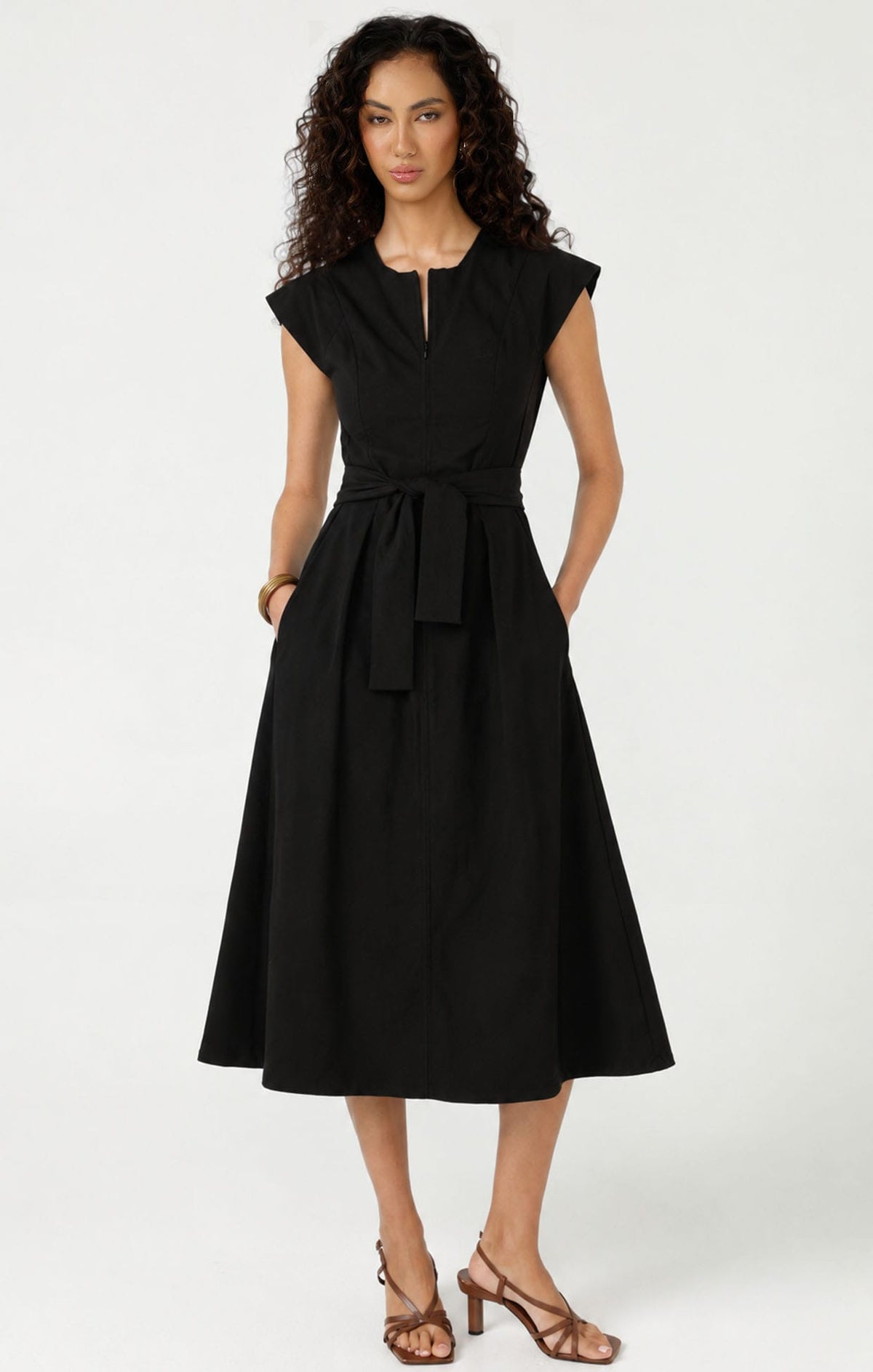

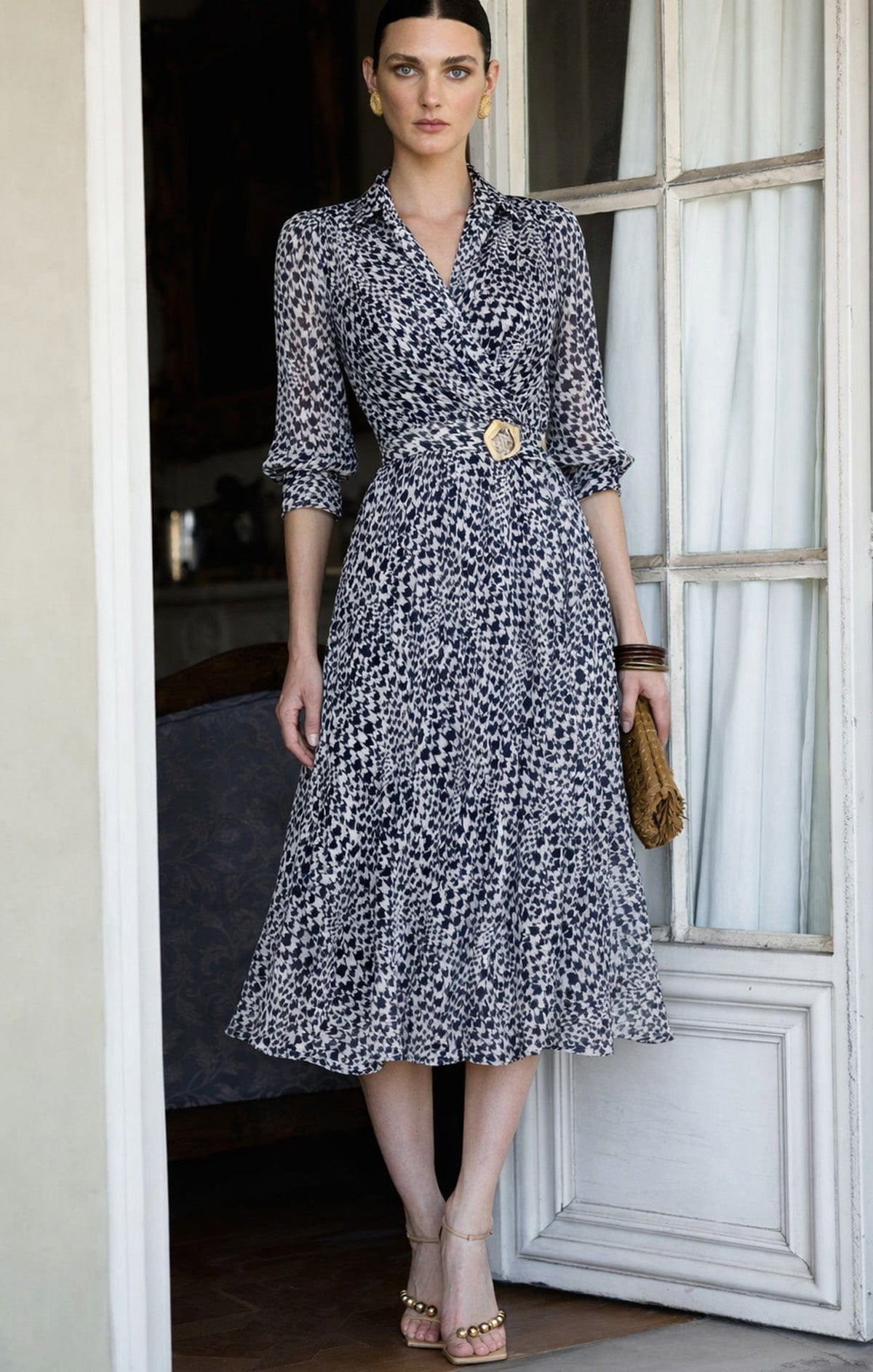

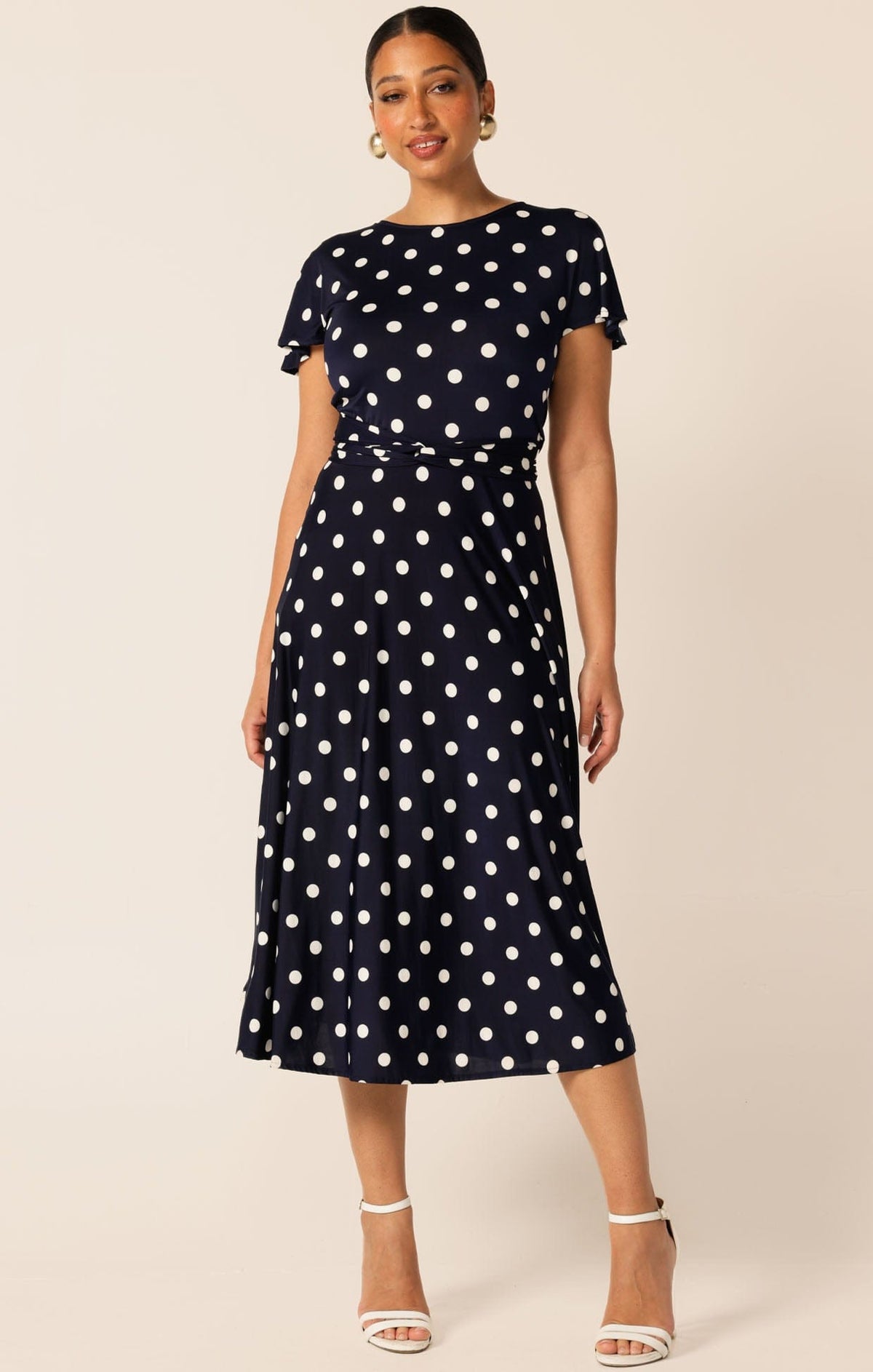

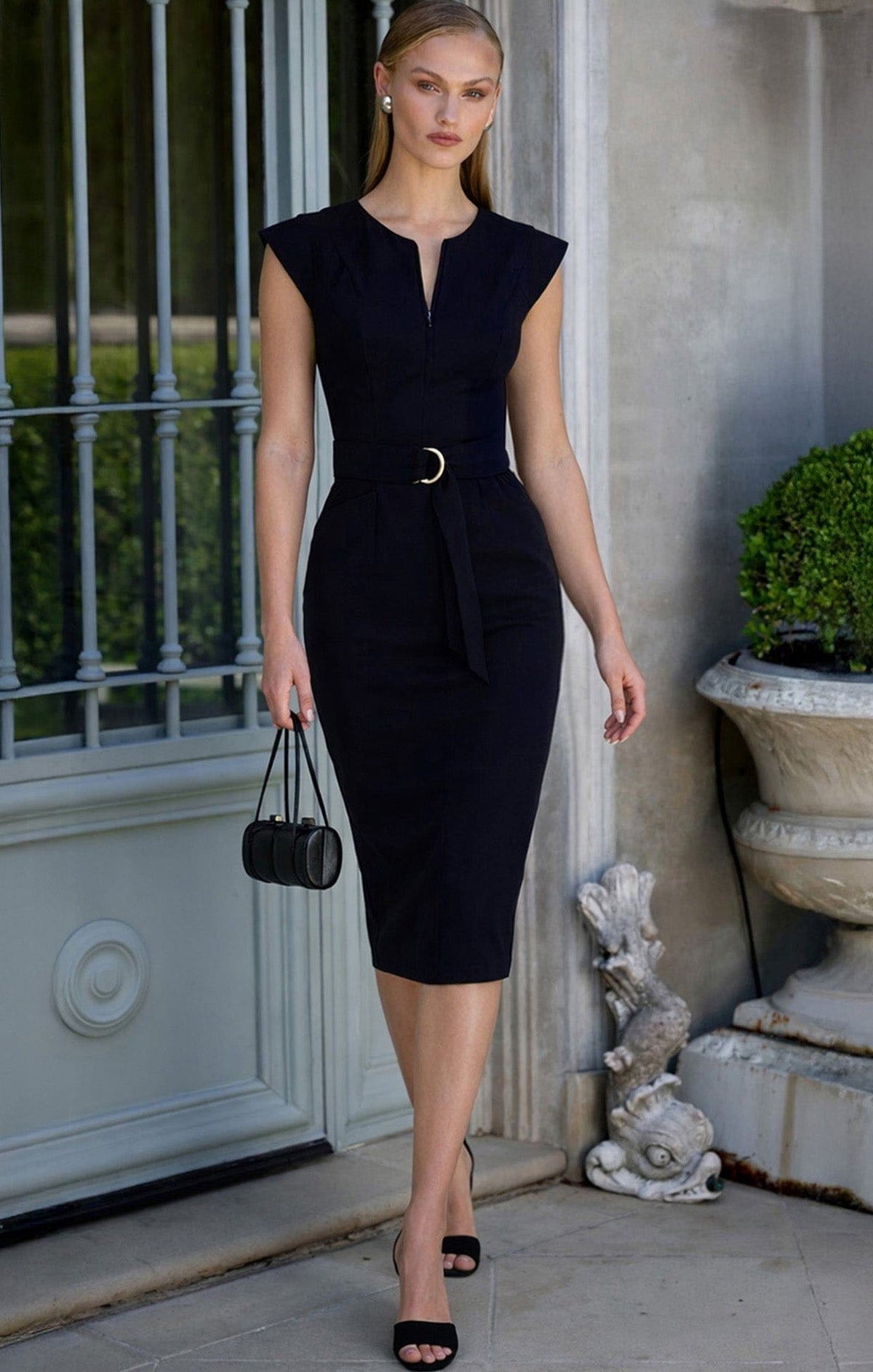


The Styles That Actually Earn Their Place
The Wrap Dress
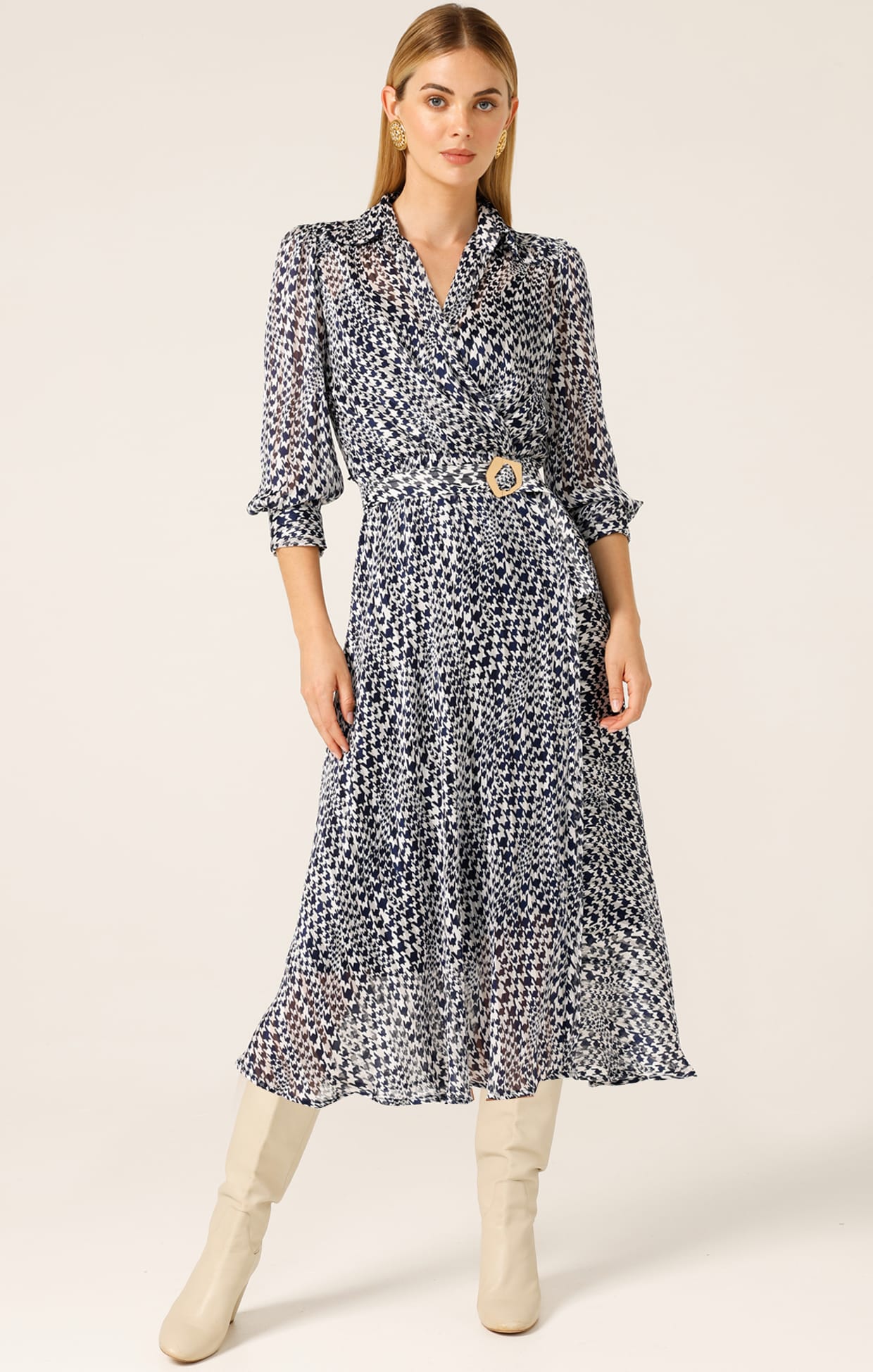
Wrap dresses have been a workwear staple for decades and they keep holding that spot because they work for a wide range of women.
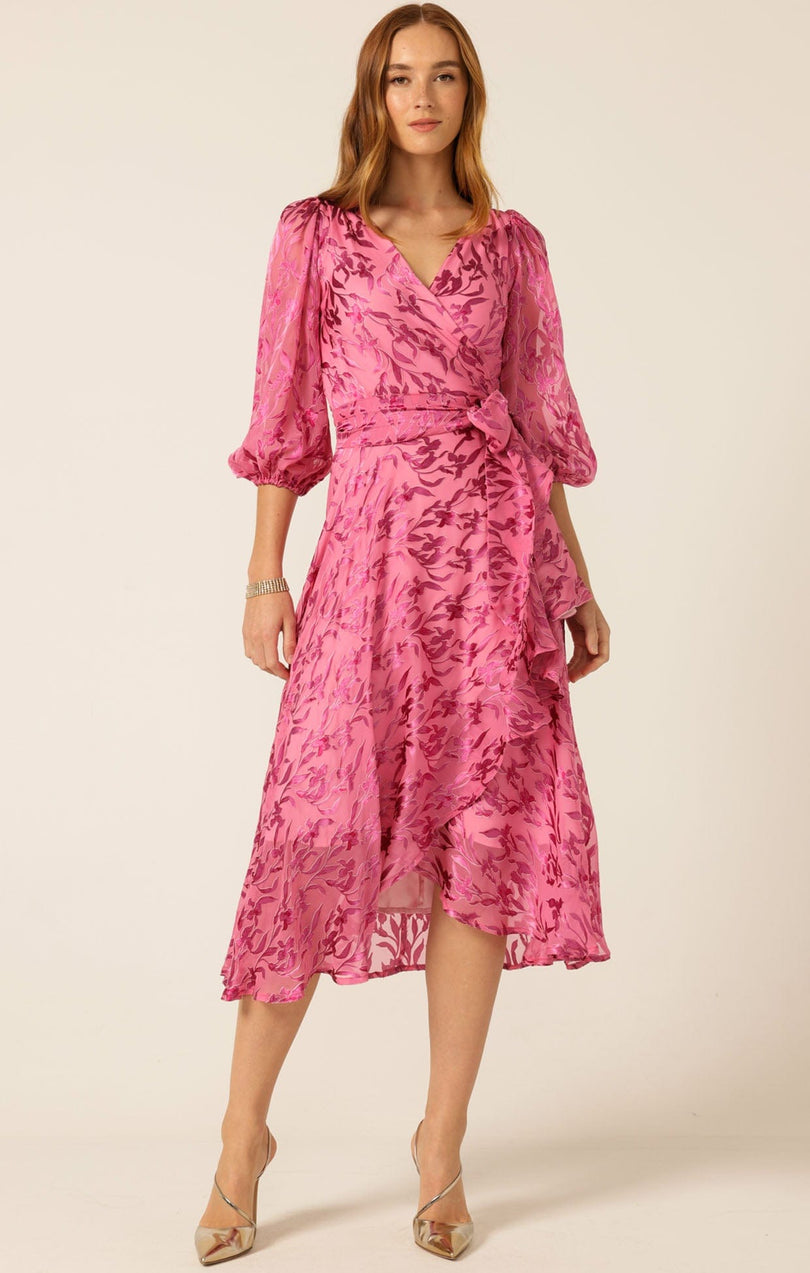
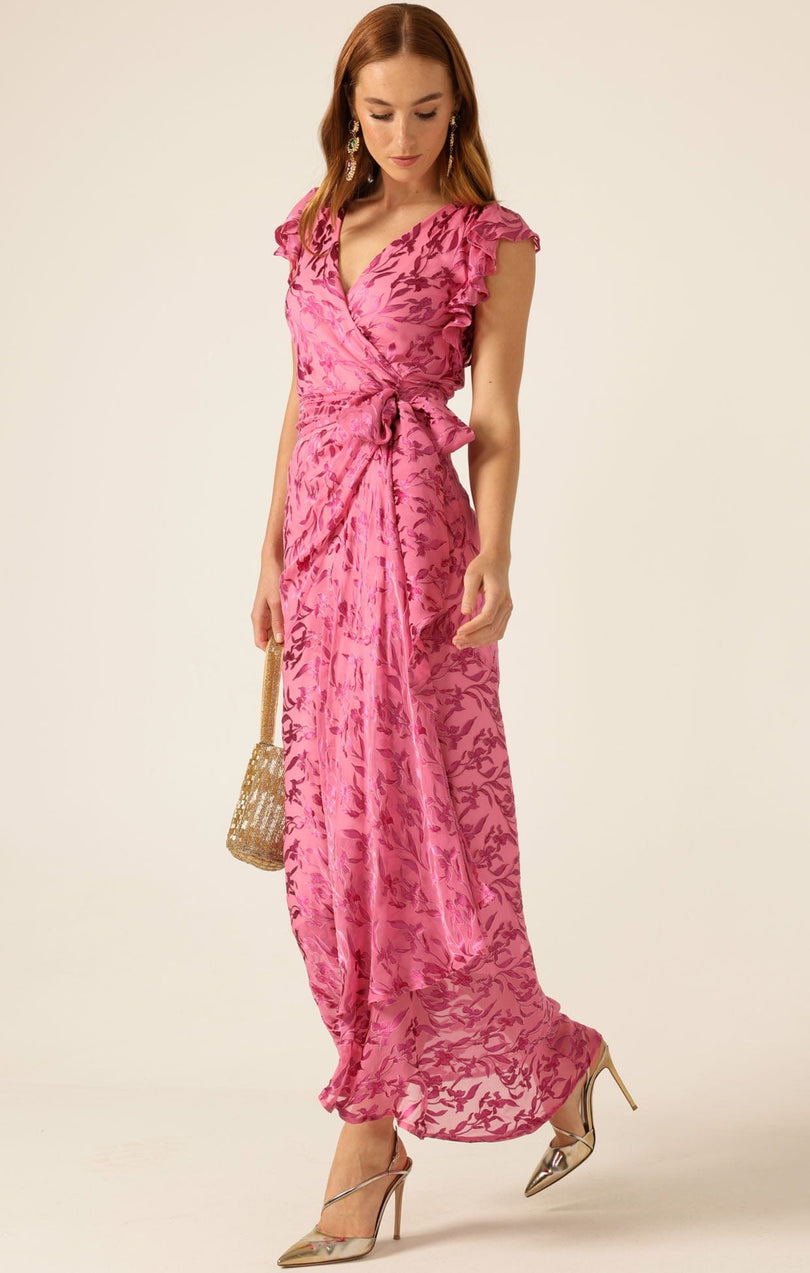
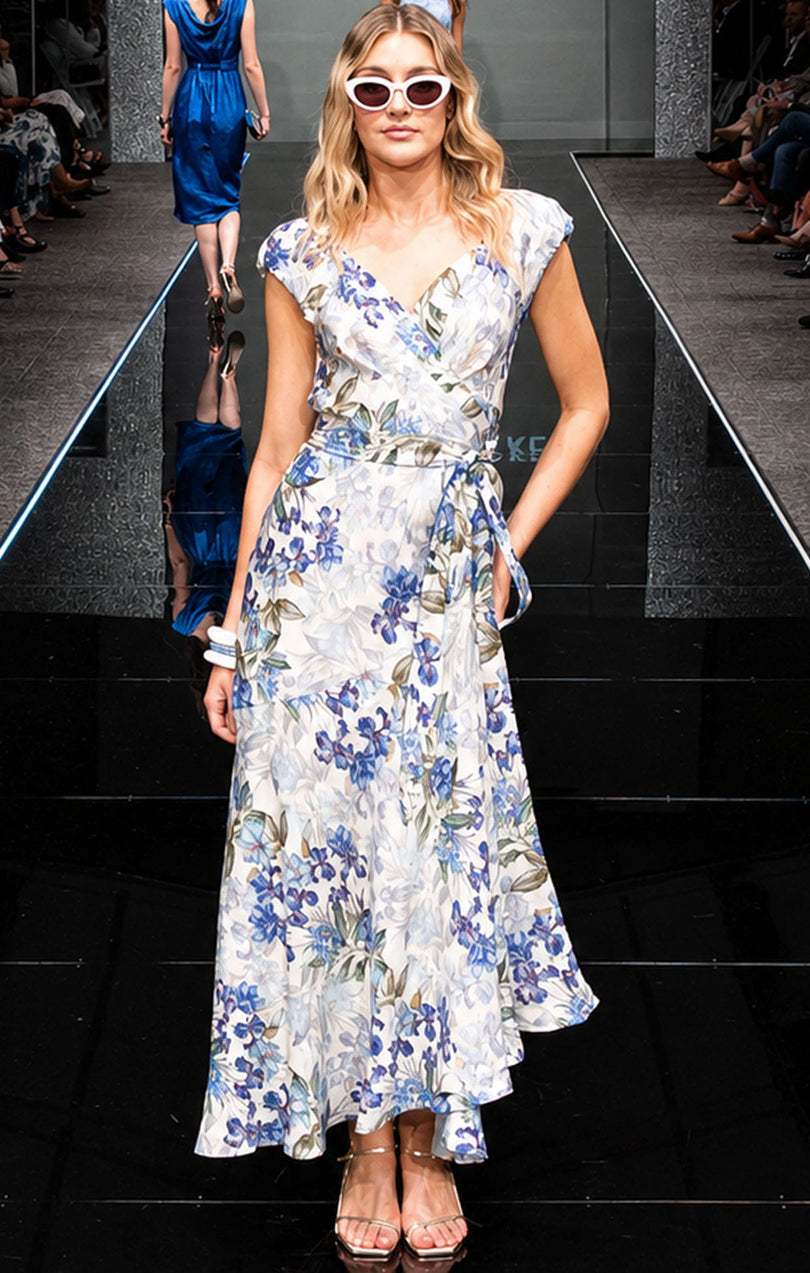
What makes the difference is the tie. A wrap dress has a tie that adjusts to whoever is actually wearing it as it creates real definition. The diagonal line it creates across the front pulls the eye inward and down, which is flattering for most figures in a way a straight seam usually isn't. Add a V-neckline and some length and the whole thing works professionally without needing a blazer thrown over the top just to make it look deliberate.
For women who have been avoiding anything fitted through the midsection because nothing ever sat right, this is often the style that shifts things.
The Styles That Actually Earn Their Place
The Structured Midi
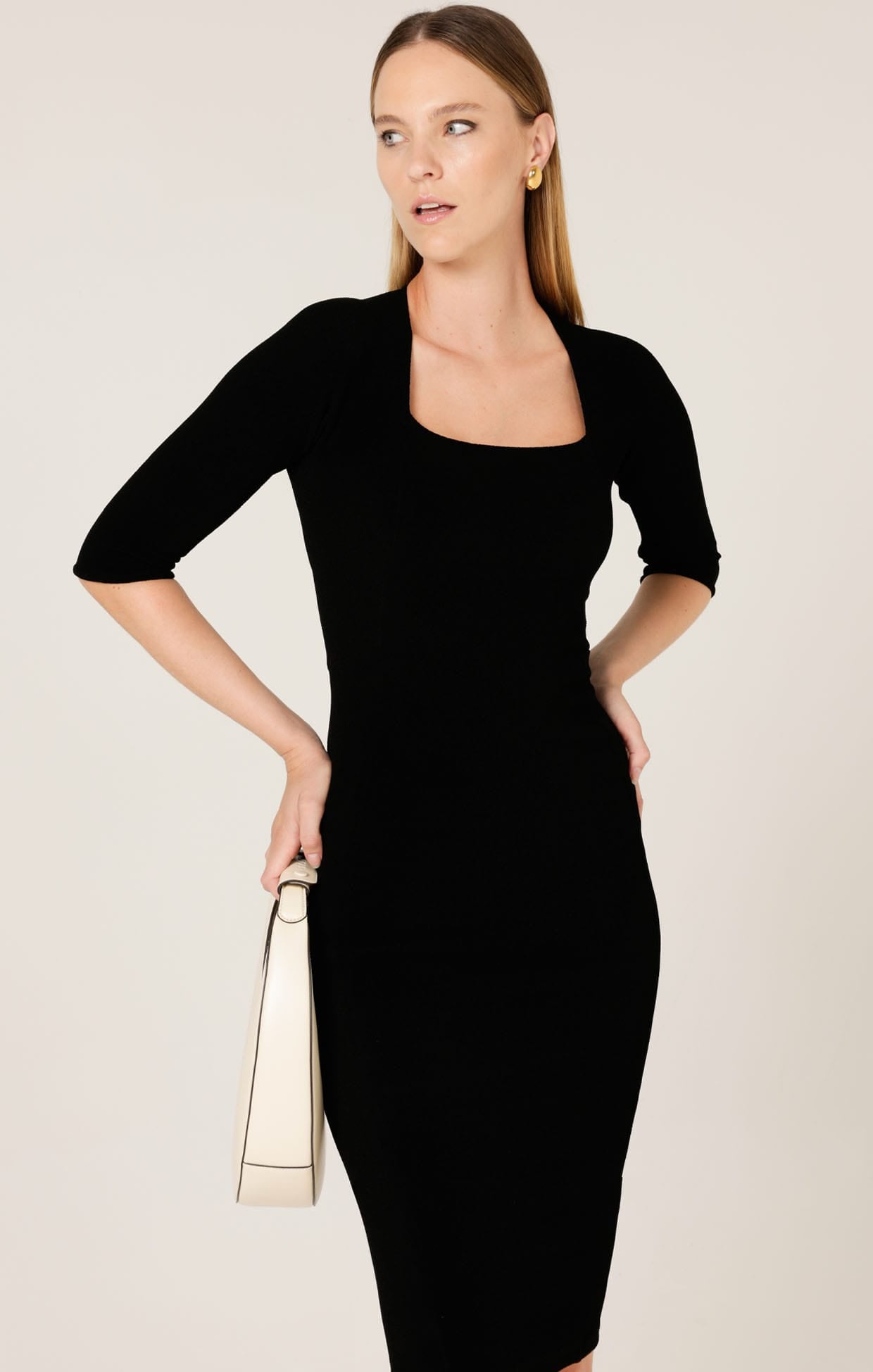
Some days you need the clothes to do a bit of work before you've even started talking. A good structured midi, in a proper fabric, is that dress.
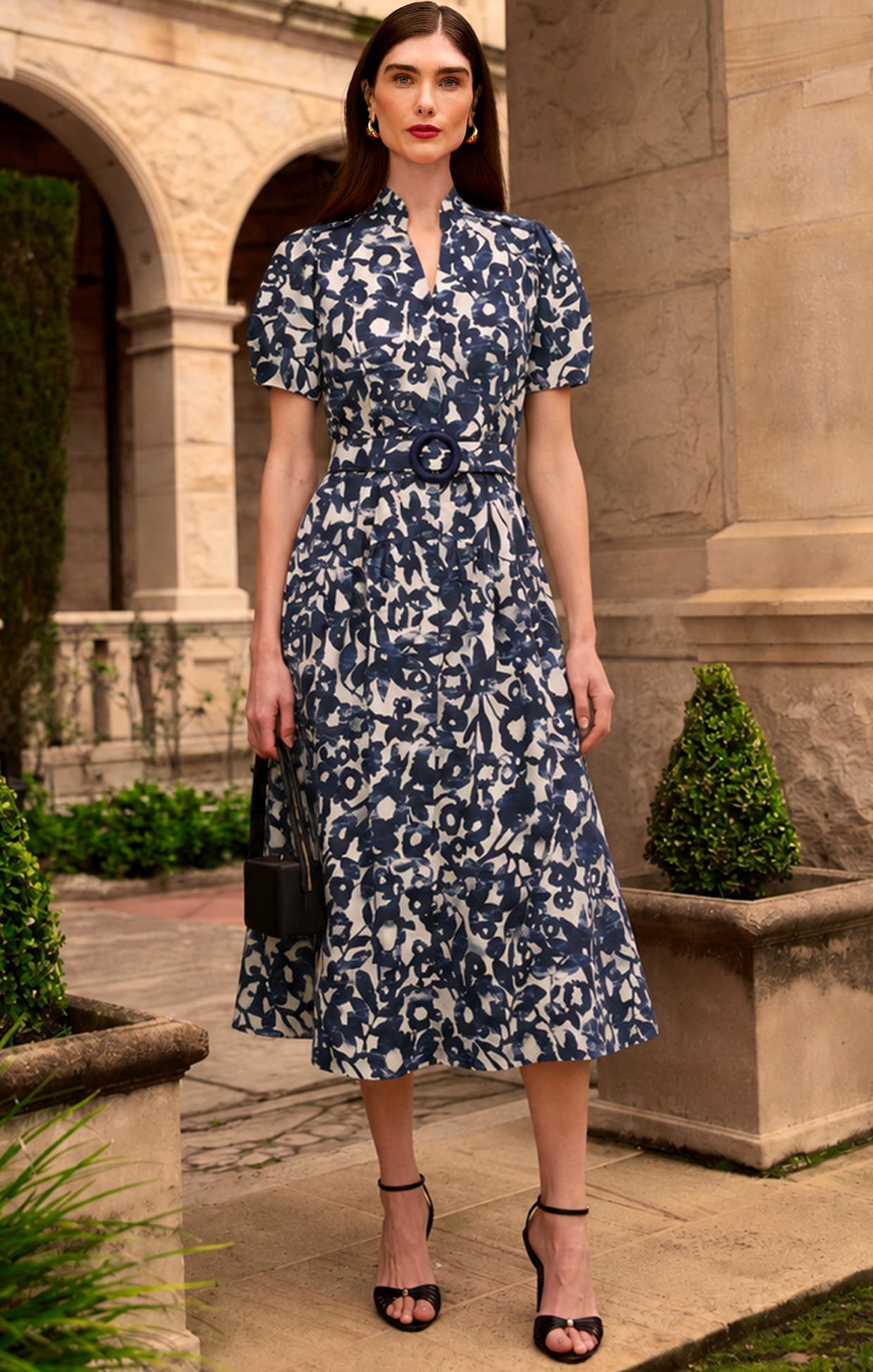
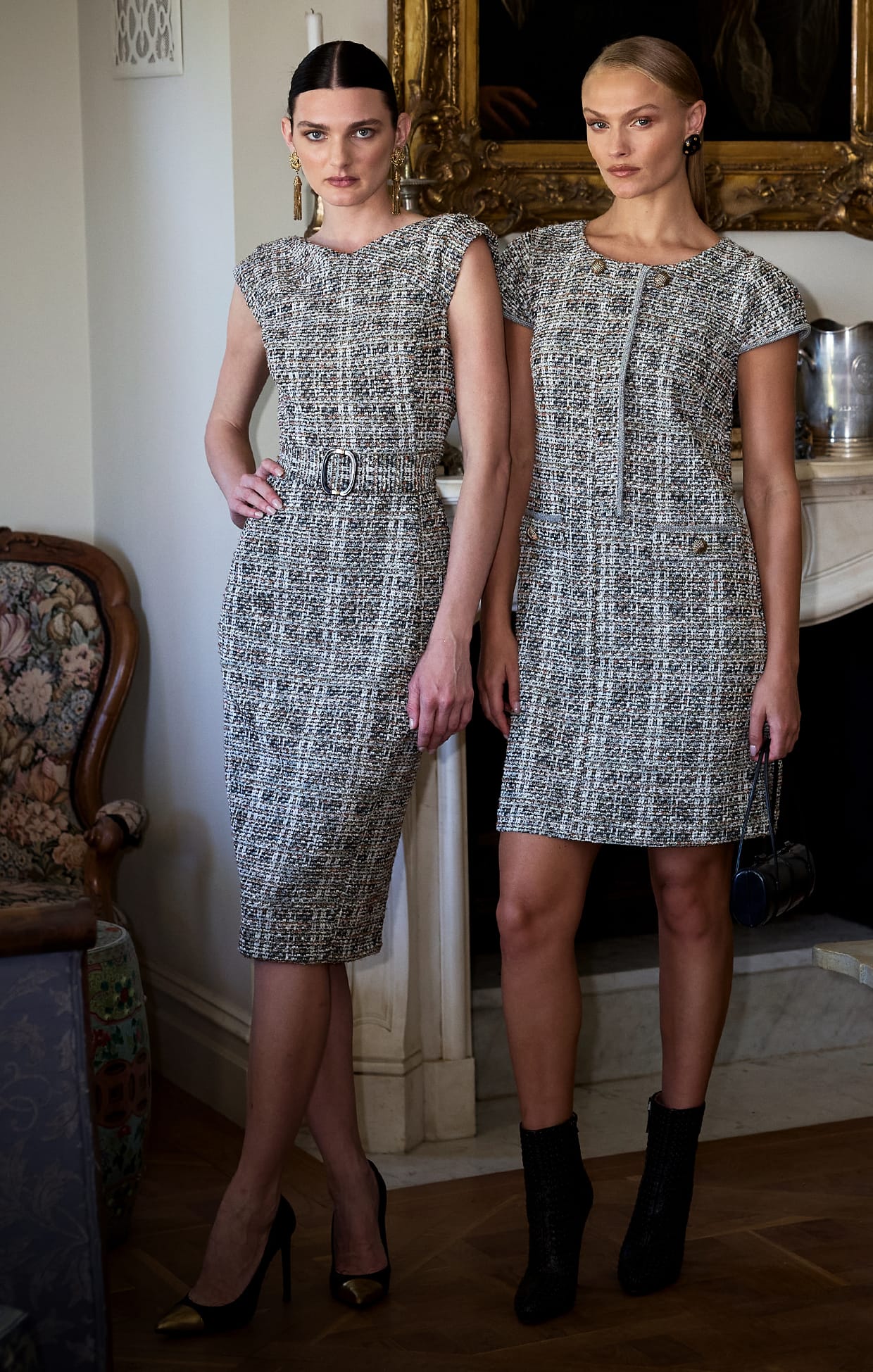
A heavy crepe or bonded stretch doesn't need boning or heavy lining to hold its shape. It just does. In navy or black with a clean heel, it carries a kind of quiet authority that suits presentations and client meetings without looking like you tried too hard. The hem is the variable worth paying attention to. A fraction too low on the leg and the whole effect deflates. At the right midi point, the dress carries itself.

The Styles That Actually Earn Their Place
The Fit-and-Flare
Most dresses try to fit the waist and accommodate the hips through the same seam. That usually means one of those things works and one doesn't.
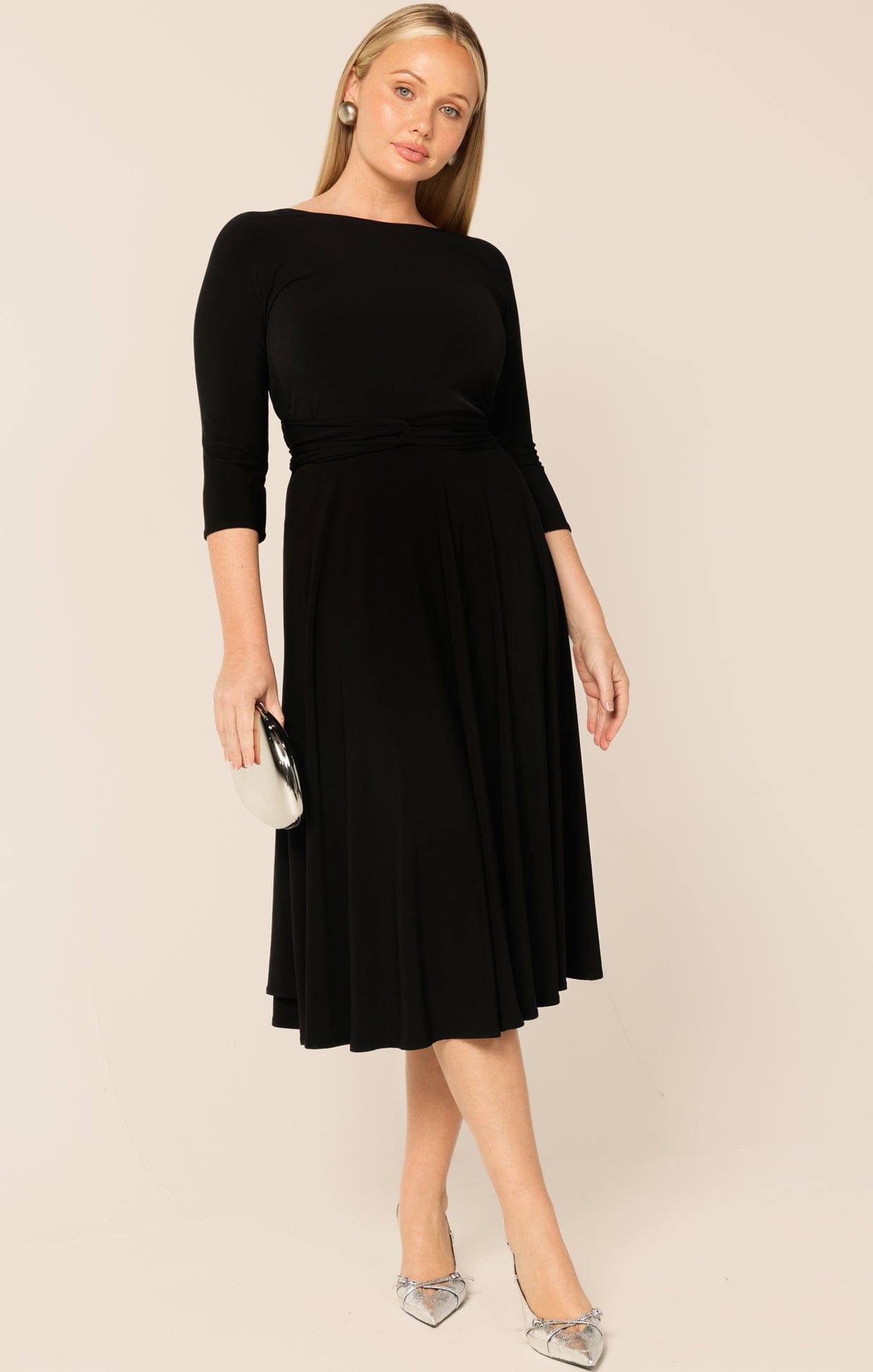
The fit-and-flare handles them separately. The bodice fits properly, then the skirt opens from the hip and falls without pulling or stretching across the widest part of the body. For women who want a smooth, relaxed line through the stomach across a long day of sitting, this is the most consistently useful shape in workwear. At midi or knee length it's appropriate for most office settings without any modification needed.
The Styles That Actually Earn Their Place
The Print Dress
The idea that print is too casual for office dressing has stuck around well past its usefulness.
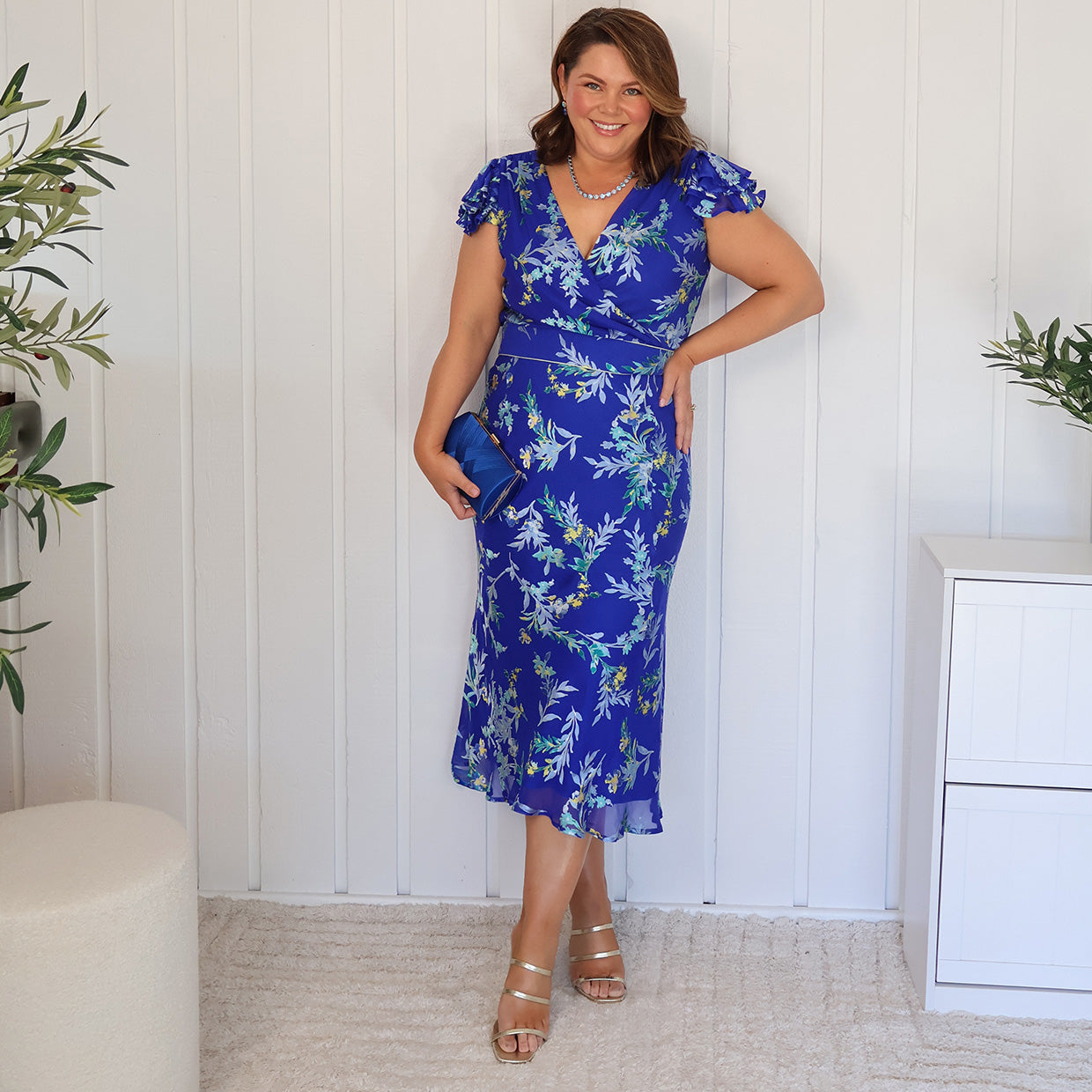
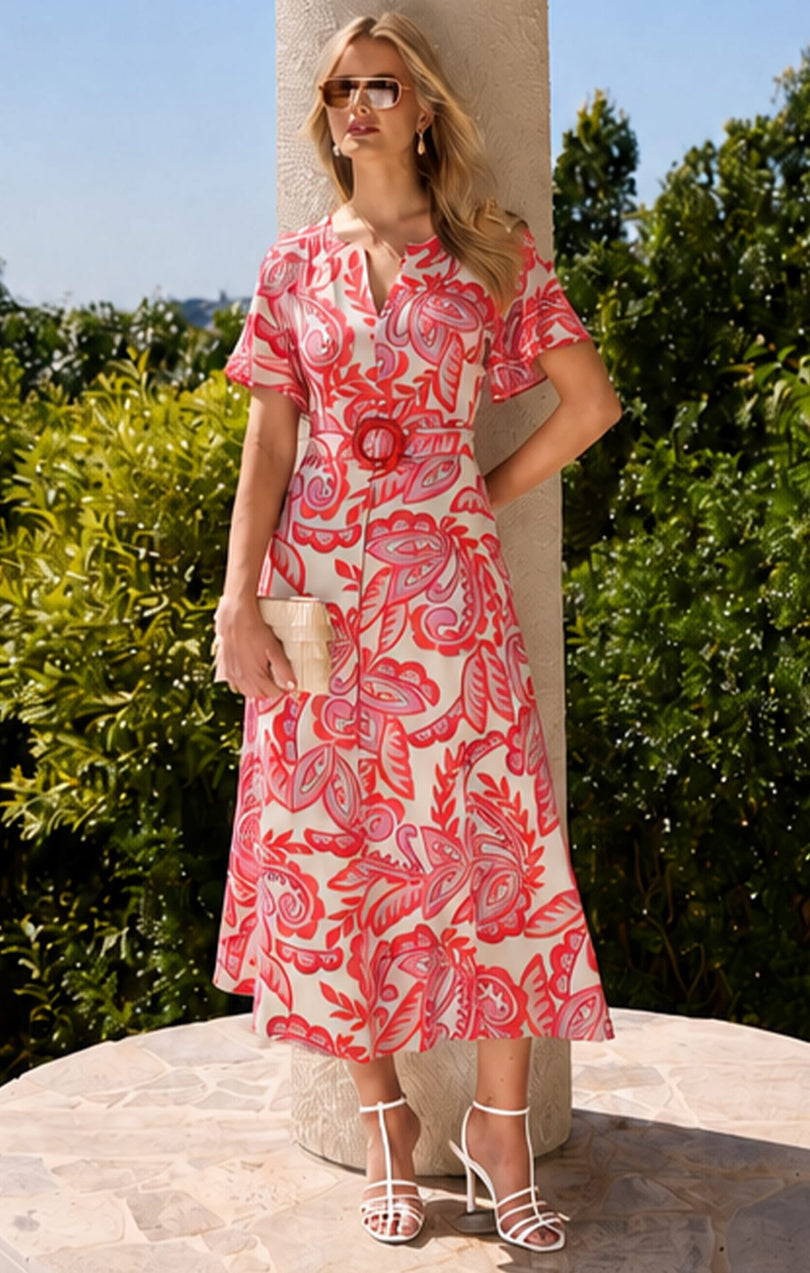
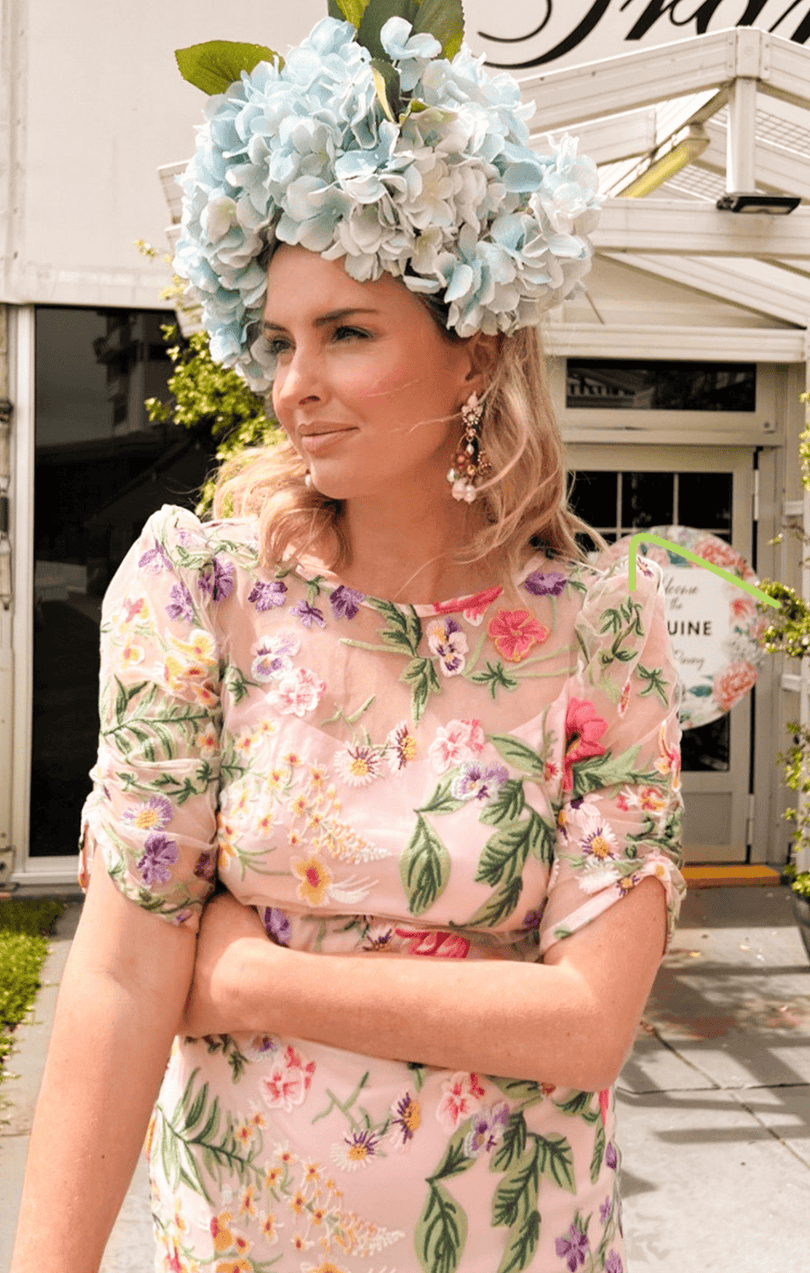
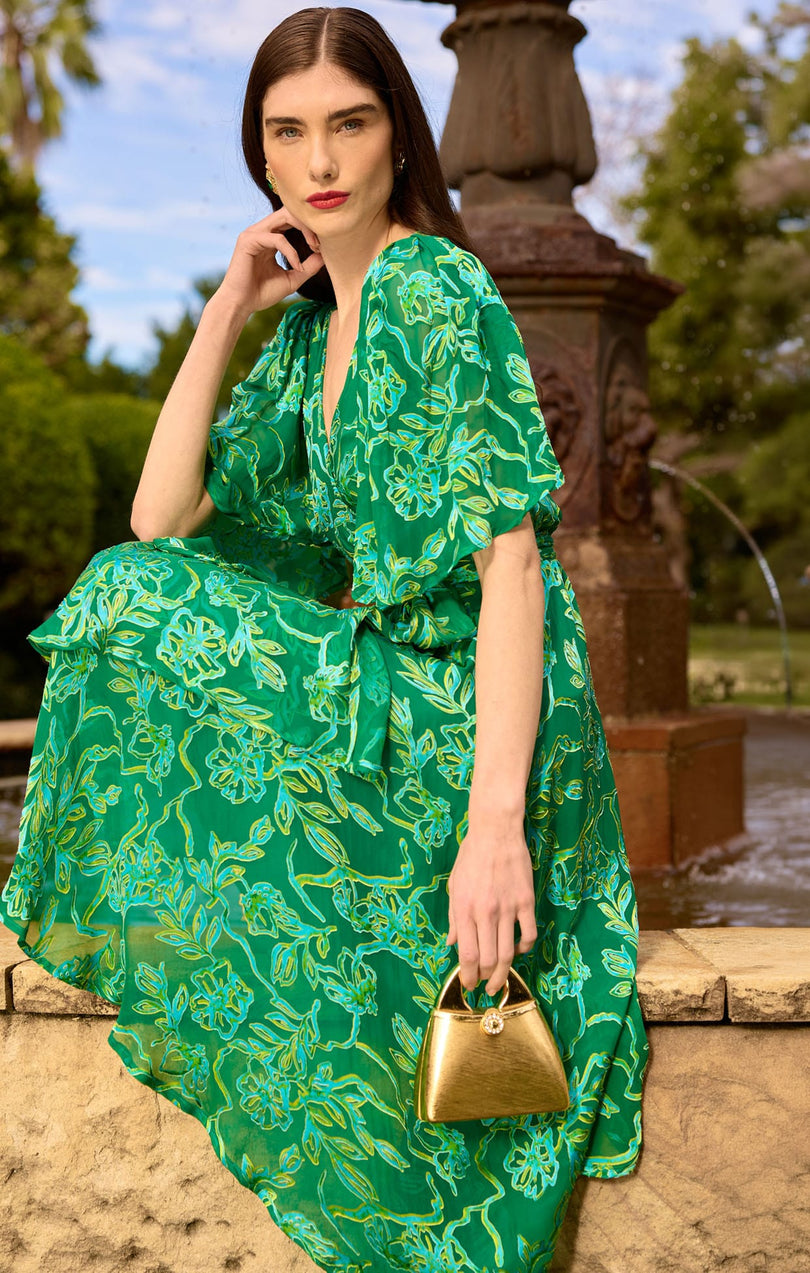
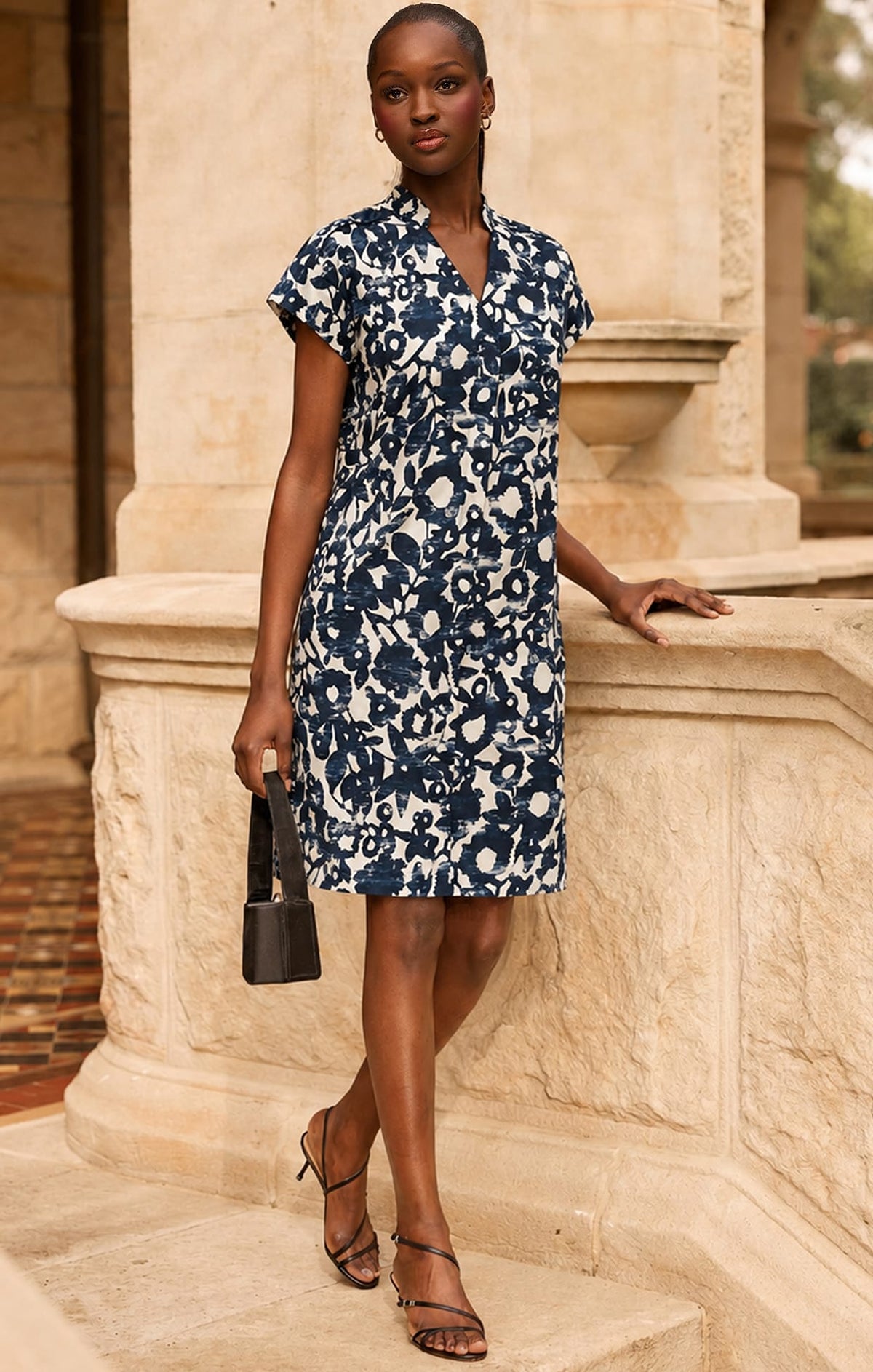
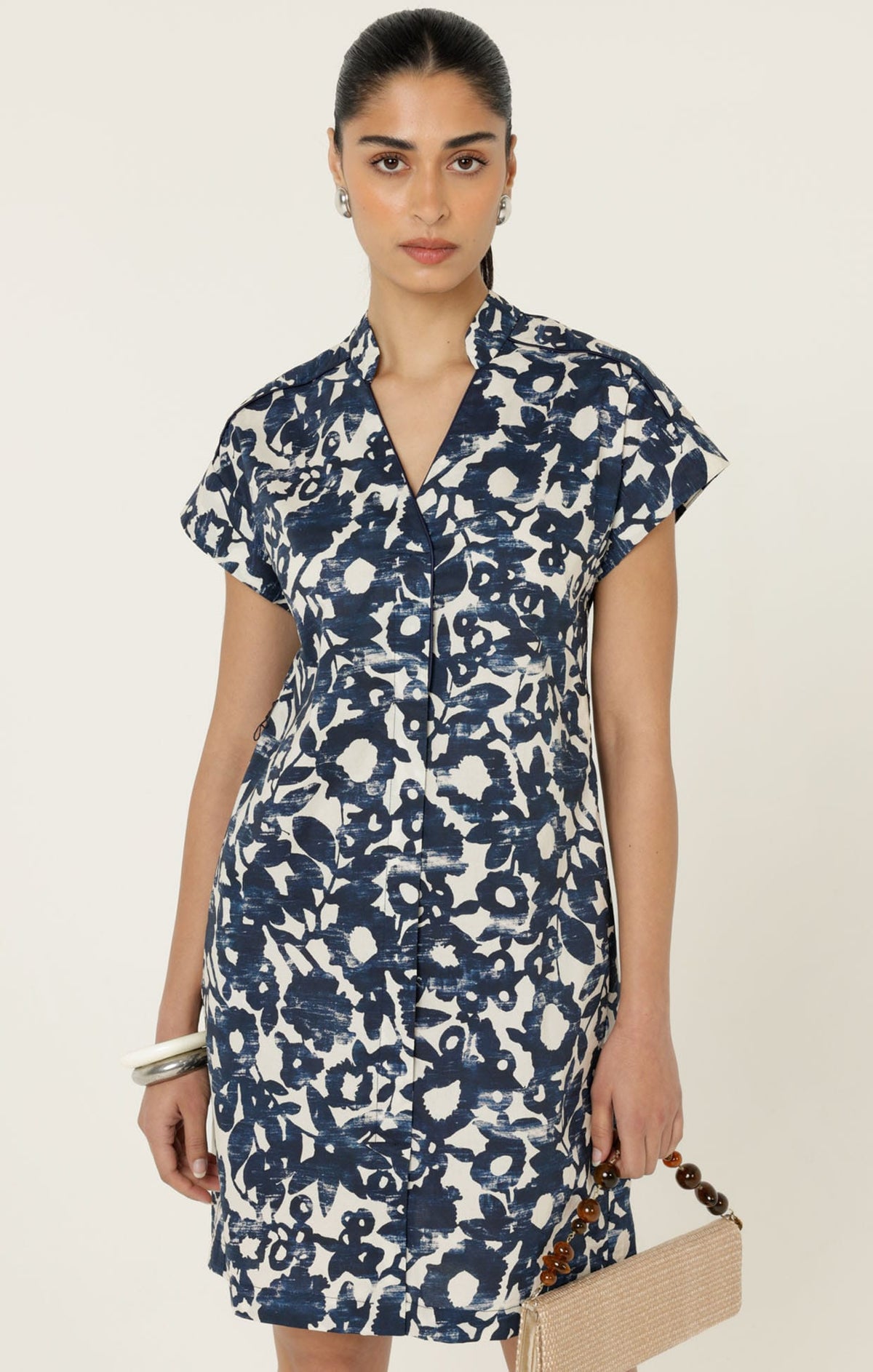
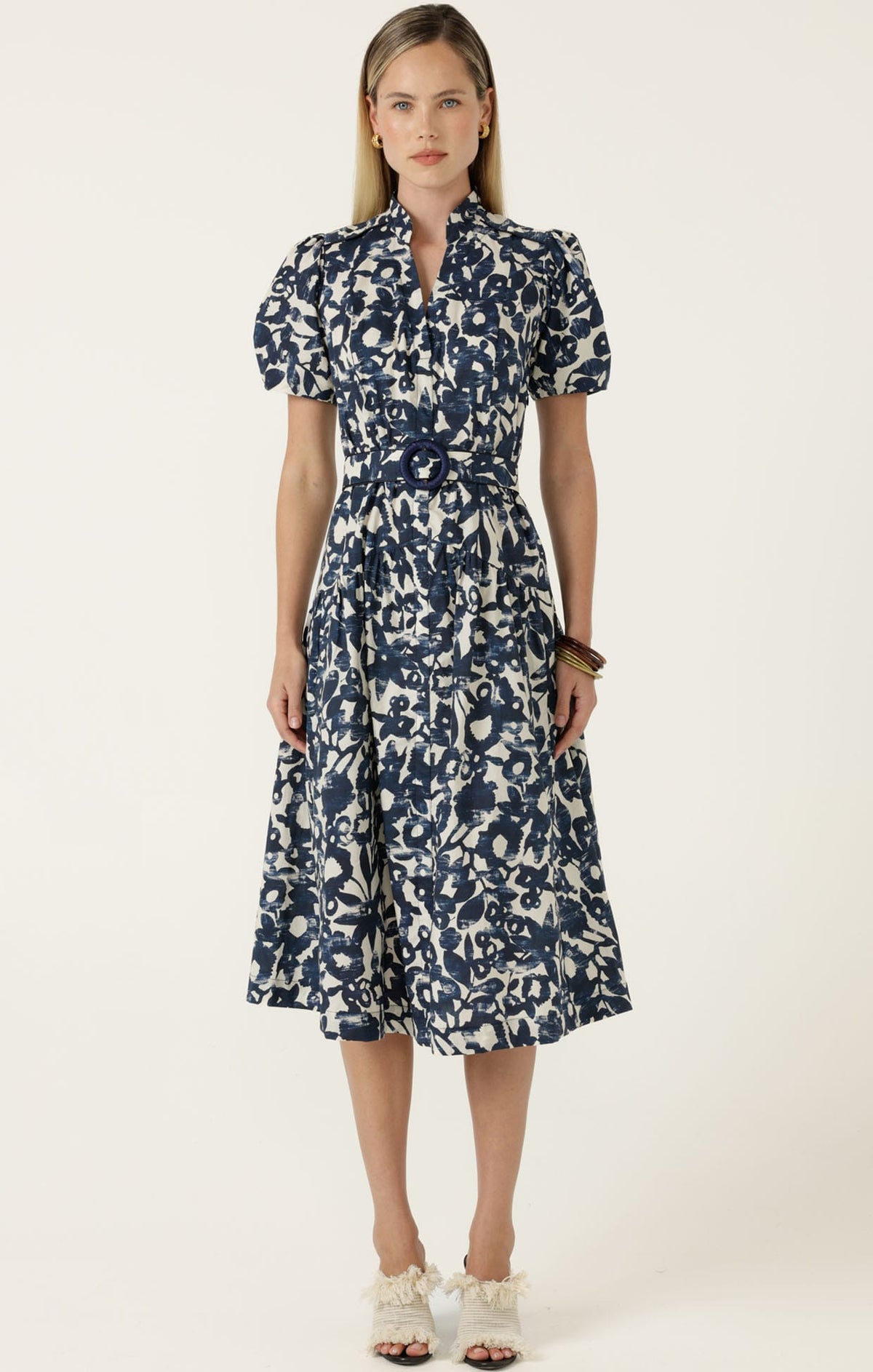
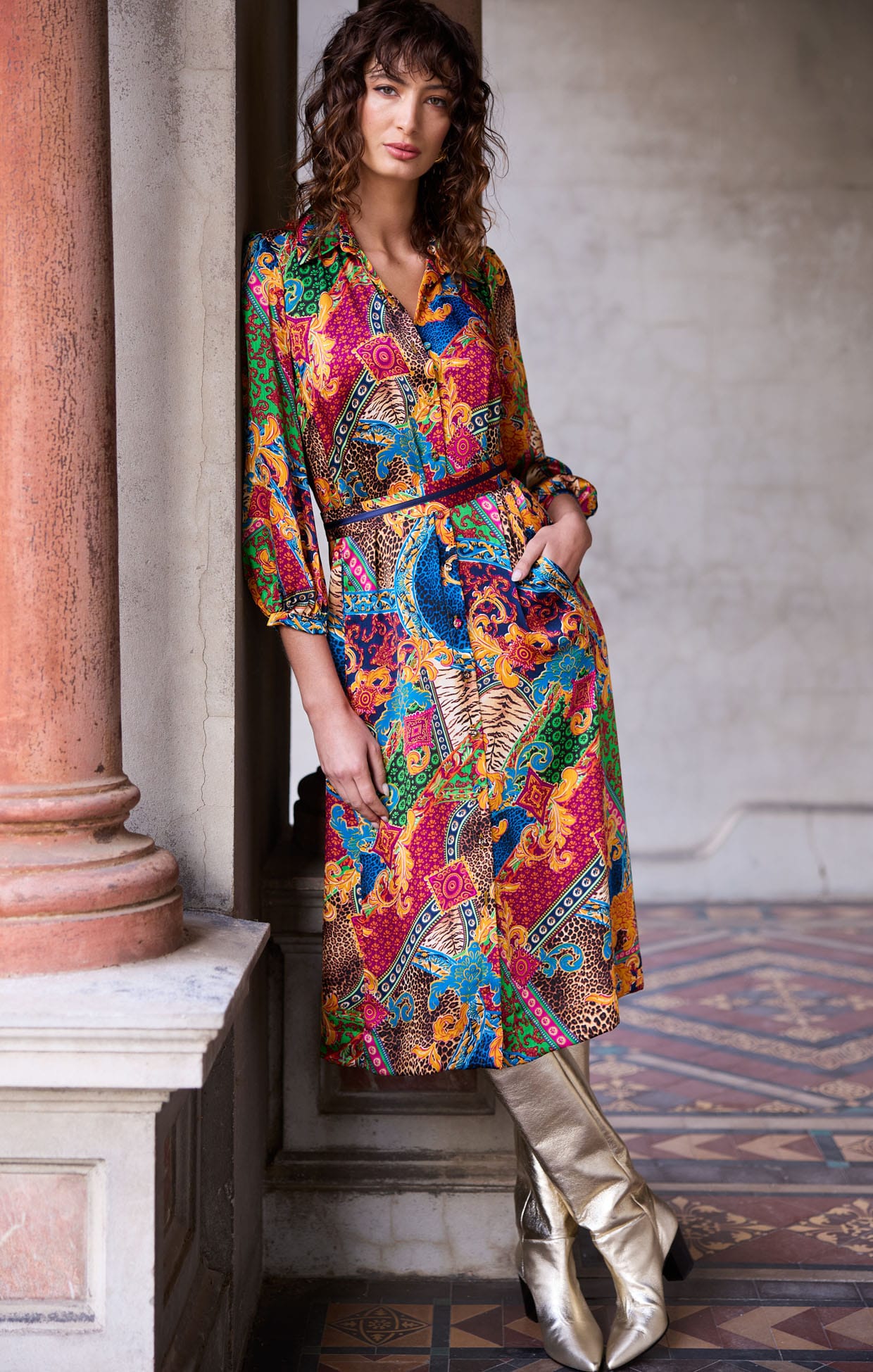
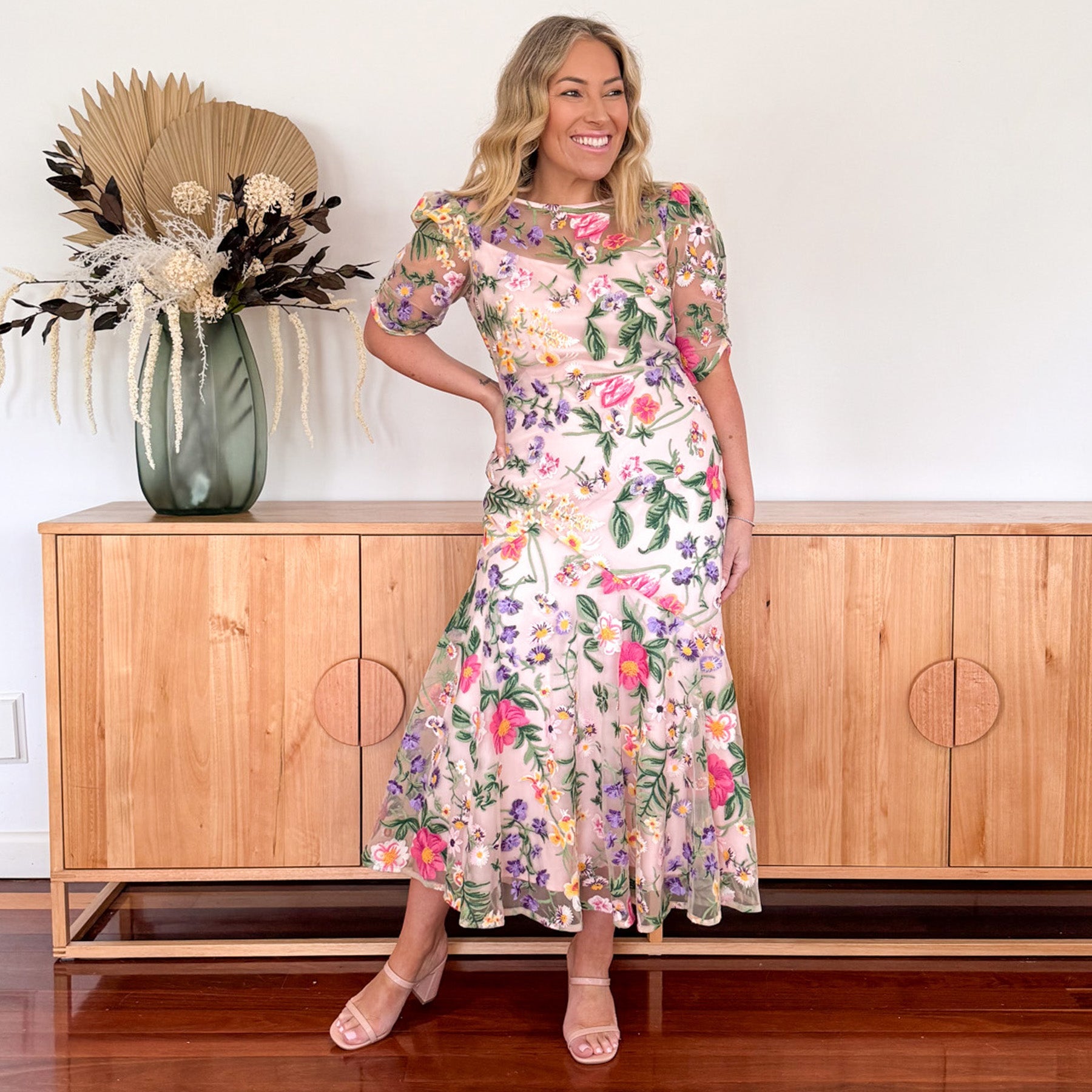
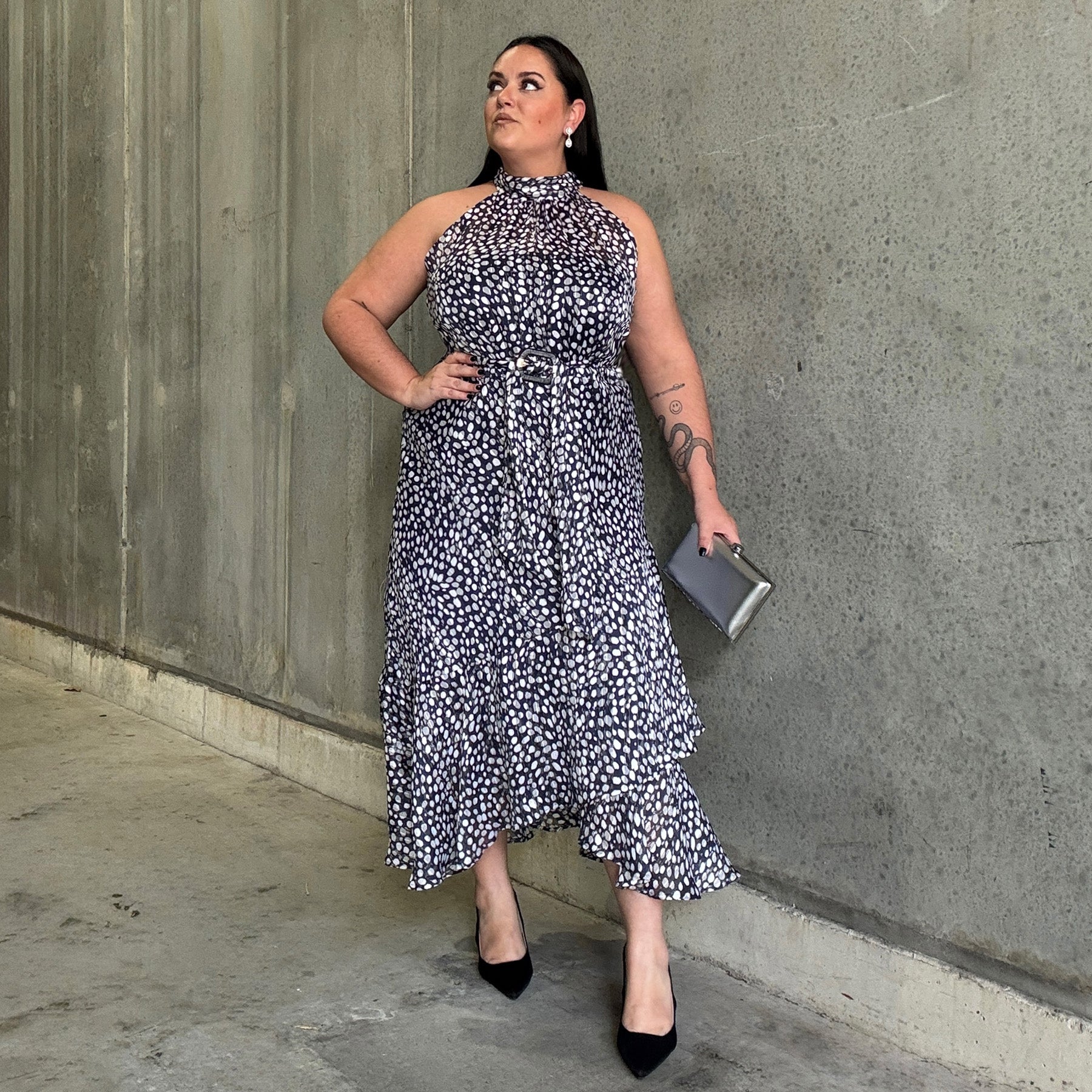
A fitted midi in a geometric print or a tonal floral looks just as sharp as a plain one, and often has considerably more personality doing the work. The print responds to what the cut is already communicating. A well-fitting dress in a bold print looks confident and considered. The same print in a shapeless cut just looks like you grabbed whatever was on the chair. Also worth knowing: prints that run continuously from neckline to hem with no visual break at the waist tend to look flat on the body. A wrap line or waist seam that interrupts the print creates noticeably better shape.
Putting a Work Wardrobe Together
Australian workplaces are less formal than they were a decade ago, but looking good still matters. The challenge for most women is finding clothes that work across a day that shifts between meetings, presentations, client lunches, and occasionally something in the evening. A dress that handles all of that without needing to be rethought halfway through is genuinely useful.
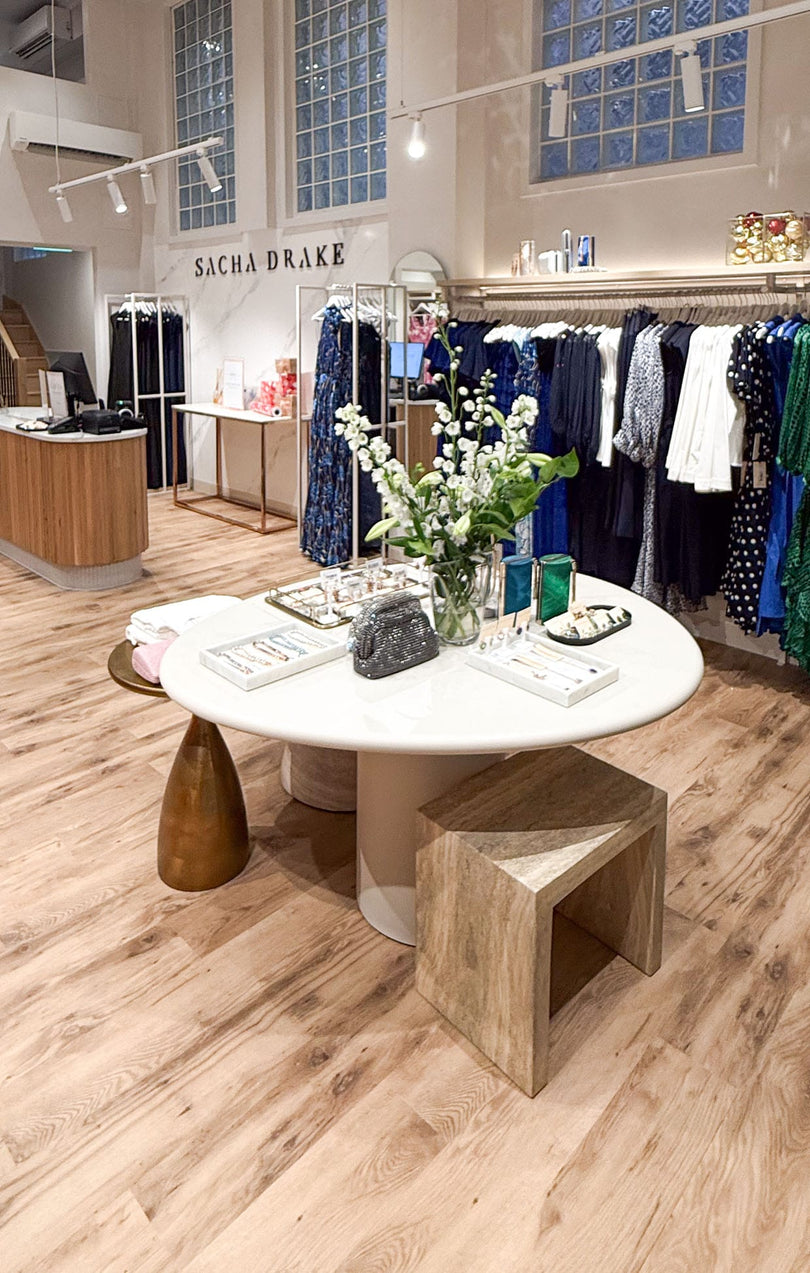
SACHA DRAKE has been making workwear both in Australia and offshore since 2002, patterning every garment on a size 14 hourglass frame rather than a standard sample. The brand works with the same local and international makers it has used for years, and the difference in how the clothes fit and hold up across a full working day tends to be clear from the first time you wear one.
FAQ
Dress Styling and Fit
For work, minimal styling lets the print or cut do the talking. Block heels, a structured bag and simple jewellery are all you need. For events, add strappy heels, a statement earring and a clutch to shift the mood entirely. SACHA DRAKE's online stylists are available via chat for personalised recommendations if you want a second opinion.
The wrap silhouette works across most body shapes because the adjustable tie allows you to manipulate the dress to your body. It is particularly flattering on Hourglass and Pear shapes as it defines the waist and skims the hips.
For a formal event, keep accessories elevated with heeled sandals, a clutch and statement jewellery. For a weekend or travel setting, flat sandals and a sun hat bring the formality down without the dress losing its impact. The SACHA DRAKE maxi is designed to transition between settings, so the same dress works across multiple occasions with a simple accessory swap.
The midi sits roughly at mid-calf and works across a broader range of occasions including workwear, cocktail events and weddings. The maxi runs to the ankle or floor and leans more toward formal occasions and warm-weather events. Both silhouettes are available in wrap and structured styles across the SACHA DRAKE range, and both are categorised by body shape to help you find the most flattering option.
Every SACHA DRAKE garment is categorised by one of five body shapes: Hourglass, Column, Pear, Apple and Maternity. The brand designs specifically to flatter each shape rather than applying a single block pattern across all sizes. Wrap and reverse-wrap styles in particular are engineered to define the waist, balance proportions and move well on the body rather than just fitting around it.
Wrap and reverse-wrap midi styles are the strongest options for a pear shape. The wrap tie allows you to define the waist while the skirt skims over the hips rather than clinging. A-line midi silhouettes also work well for the same reason.
Stay up-to-date
Blog posts
Mother of the Bride Dresses for Every Body Shape
Dresses That Work Well on Fuller Bust